
Understanding the New Winamax Multiplier Structure
Introduction
Winamax’s Expresso tournaments have long been among the most popular lottery Sit & Go formats in online poker. Their unique combination of fast-paced gameplay and randomly generated prize pools with different multipliers attracts thousands of players every day.
Recently, Winamax introduced several changes to its Expresso multiplier structure. At first glance, these adjustments may seem minor, but they raise an important question:
What do the changes actually mean for players?
To answer that question, we took a closer look at the new multiplier structure.
In this first article, we’ll compare the new structure with the previous one, highlight the key changes and explain how they could affect the Expresso format.
In the second article, we’ll examine each of these changes and answer the question every player wants to know:
Do the new Winamax multiplier changes actually benefit players?
1. What Has Changed?
The first observation is that Winamax has kept the total payback to players unchanged at €1.395.000.000 per 10 million tournaments. The changes introduced by Winamax affect only the frequency with which certain multipliers occur and the values of a small number of multipliers.
The lowest multiplier, 2x, has seen its frequency decrease from 59.39% to 52.49%. The frequency of the 10x multiplier has also decreased slightly, from 1.5% to 1.0%. In contrast, the frequencies of the 3x and 4x multipliers have increased. The 3x multiplier now appears 33.34% of the time, up from 26.74%, while the 4x multiplier has increased from 8.25% to 9.00%.
Another important structural change concerns the multiplier structure itself. The 50x multiplier has been removed entirely and replaced by a 20x multiplier. This new multiplier appears more frequently, occurring 1.5% of the time instead of 1.0% previously.
Finally, the frequency of the highest multiplier has been cut in half, appearing only 10 times per 10 million tournaments instead of 20. These structural changes are summarized in Table 1, where the old multiplier structure is shown in red and the new multiplier structure in green. The final column, “CHANGE (VS OLD),” displays the relative change in the probability (frequency) of each multiplier compared with the previous structure.
Because each multiplier has both a fixed payout and a fixed probability of occurring, changing either one changes the amount of prize money allocated to that multiplier tier. As a result, some multiplier tiers now receive a larger share of the total payback to players, while others receive a smaller share. This is also illustrated in Table 1, where the accompanying arrow in the “CHANGE (VS OLD)” column indicates whether the total payback allocated to that multiplier has increased, decreased, or remained unchanged. Since the overall payback to players remains unchanged, these adjustments represent a redistribution of the existing prize pool rather than an increase or decrease in the total amount returned to players.
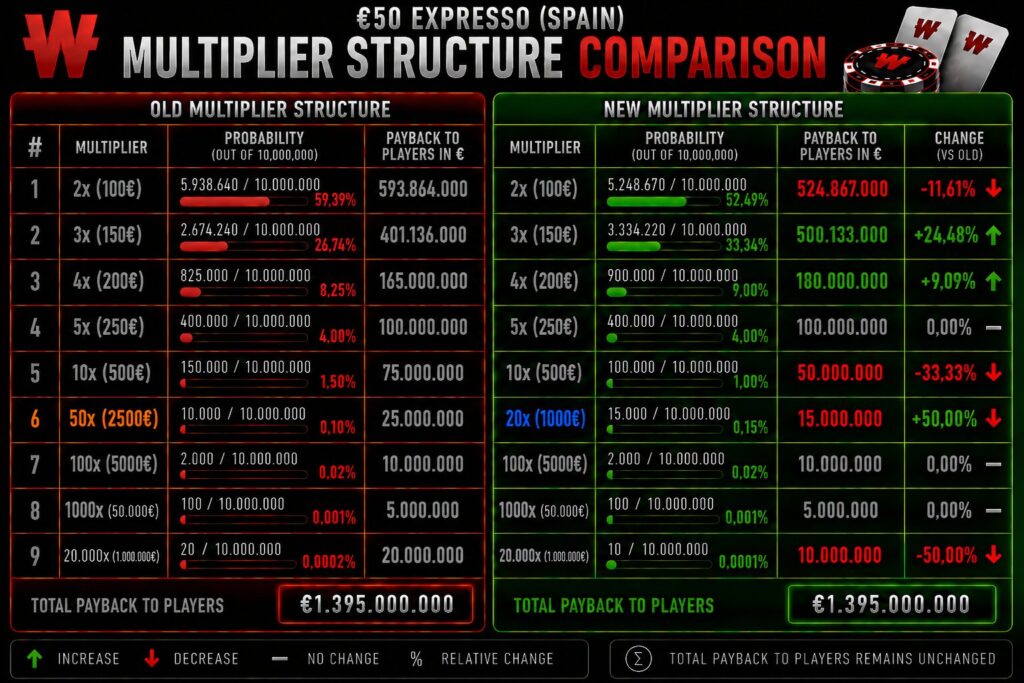
Table 1: Old vs. New Multiplier Structure
The data were obtained from the Winamax Spain pool at the €50 stake level. The same structural changes also apply to the €25 stake level in Spain and are broadly similar across other Winamax player pools, including France. Throughout this article series, however, we focus specifically on the Spanish €50 games. Although the exact figures may differ at other stakes or in other player pools, the overall conclusions provide a useful framework for analyzing those structures as well.
In summary, Winamax introduced six key structural changes to its multiplier distribution:
- Total Payback to Players
- Reduced Top Jackpot Frequency
- Replacement of the 50x with a 20x Multiplier
- Reduced 2x Frequency
- Increased 3x and 4x Frequencies
- Reduced 10x Frequency.
The next step is to determine how these six structural changes influence the fundamental poker metrics introduced in the following section and, ultimately, how they affect the Expresso format as a whole.
2. Why Do Multiplier Changes Affect Poker Metrics?
At first glance, changing the frequency or value of individual multipliers may seem to affect only the prize pool. In reality, however, these structural adjustments can influence every major characteristic of the format, including expected value (EV), rake, variance, and the overall player experience.
Every poker format can essentially be evaluated through four fundamental questions:
- How much can I theoretically win?
- How much does the poker room keep?
- How volatile are my results?
- What does it feel like to play?
Throughout this analysis, we use these four questions as the analytical framework for evaluating the new Winamax multiplier structure. The relationship between these four fundamental questions and their corresponding poker metrics is summarized in Table 2.
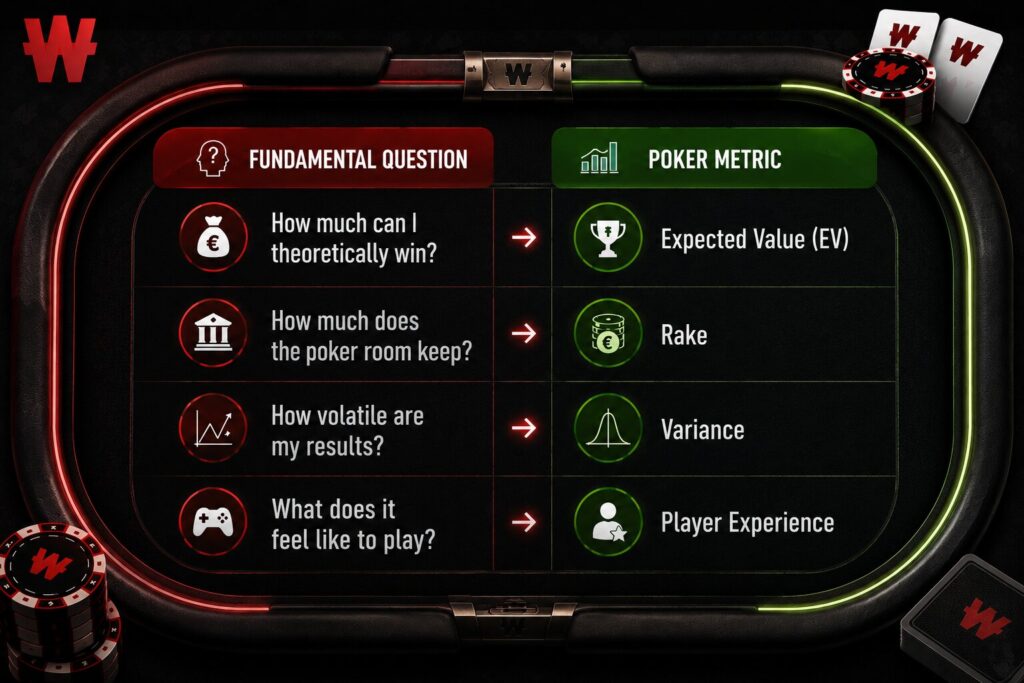
Table 2: Relationship Between Fundamental Questions and Poker Metrics
Before applying this framework in the second article, let’s briefly introduce each of the four poker metrics and explain why they matter in the context of Expresso tournaments.
a. Rake
Rake determines how much of the total money paid into the games is retained by the poker room rather than returned to players. If a structural change alters the total payback to players, it also changes the amount of money retained by the poker room and therefore affects the overall rake.
b. Expected Value (EV)
Expected value represents the average long-term return a player can expect from participating in the format. Because the multiplier structure determines the expected prize pool, redistributing prize money can influence either the theoretical expected value or how closely that value is realized over practical sample sizes.
c. Variance
Variance measures the degree to which a player’s results fluctuate around their expected value. In lottery Sit & Go formats, variance depends not only on the average prize pool but also on how that prize pool is distributed across the different multipliers. Concentrating a larger proportion of the prize pool in extremely rare jackpots increases variance, whereas distributing more prize money among frequently occurring multipliers generally reduces it.
d. Overall Player Experience
Not every structural change is reflected purely by mathematical metrics. The frequency with which players encounter different prize pools also influences how the format feels to play. Consequently, changes affecting commonly occurring multipliers often have a much greater impact on the day-to-day player experience than changes affecting jackpots that most players will never encounter.
Together, these four aspects provide a comprehensive framework for evaluating both the mathematical and practical impact of the new Winamax multiplier structure. In the second article, we apply this framework to analyze how each structural change affects these four key metrics.
3. The Final Word
In this article, we looked at the changes introduced in the new Winamax multiplier structure and identified the six key structural adjustments that form the basis of our analysis.
We then introduced the four key poker metrics that we’ll use to evaluate those changes: rake, expected value (EV), variance, and the overall player experience.
With this foundation in place, we are now ready to answer the most important question:
Do the new Winamax multiplier changes actually benefit players?
Stay tuned—in the next article, we apply this framework to evaluate how each structural change affects the Expresso format and determine whether the new multiplier structure is ultimately more favorable for players.
The roadmap shown in Table 3 summarizes the journey completed in this first article and illustrates how the second article builds upon this foundation.

Table 3: Article Roadmap Summary
Are you already part of our Winamax Club? If not, check it out here and join the Team Bas Poker community.

